



POLYPORUS ESSENTIAL NOTES
Additional key active biomolecules identified in this species include beta-glucans, triterpenes, ergothioneine, GABA (gamma-aminobutyric acid), and provitamin D₂ (ergosterol).
Research Areas in P. umbellatus
Scientific investigation into this functional fungus has accelerated rapidly in recent years, driven by its exceptional profile of bioactive metabolites and growing application across modern nutritional research.

POLYPORUS DOCUMENTED USES
Concentrated standardised extracts represent the preferred format for optimizing the bioavailability of key nutrients found within Polyporus. This extraction process guarantees high concentrations of beta-glucans, triterpenes, and key bioactive sterols such as ergone, among other fungal compounds.
Active Biomolecules and Formulations
Pure Polyporus extract is featured in Mico-Polypor, a premium food supplement in capsules formulated exclusively from 100% certified organic, standardized pure extract of Polyporus umbellatus.
Additionally, Polyporus extract is combined synergistically with Maitake extract in Hifas-Detox. The complementary action of these concentrated extracts continues to be highlighted across modern integrative nutrition research and academic symposia.
Products with Polyporus
-

 Hasta - 10 %
HIFAS-Detox (Maitake and Polyporus extract) capsules
WITH POLYPORUS & MAITAKE
From 42,50 €Unit price /Unavailable -


POLYPORUS CULTIVATION
Polyporus umbellatus derives its nutrients from woody substrates, demonstrating a natural affinity for hardwood species such as oak and beech. Cultivation takes place using specialised grow bags packed with certified organic hardwood substrates matching these native wood environments.
Fungi absorb nutrients directly from their growth medium. For this reason, certified organic cultivation is used to ensure the harvested mushroom material remains pure and free from unwanted contaminants.
Organic Substrates and Quality Cultivation in P. umbellatus
To ensure consistency across finished food supplements, production utilizes controlled cultivation environments with organic substrates designed to yield a standardized natural composition.
Featured Biomolecules
This species contains substances, including:


Do you want to know more?
Habitat and distribution
Habitat and distribution
This mushroom can be found in mixed forests of all latitudes, being less frequent in Europe. Central America, Oriental Asia are the areas where more specimens have been found to grow wild.
Mycological notes
Mycological notes
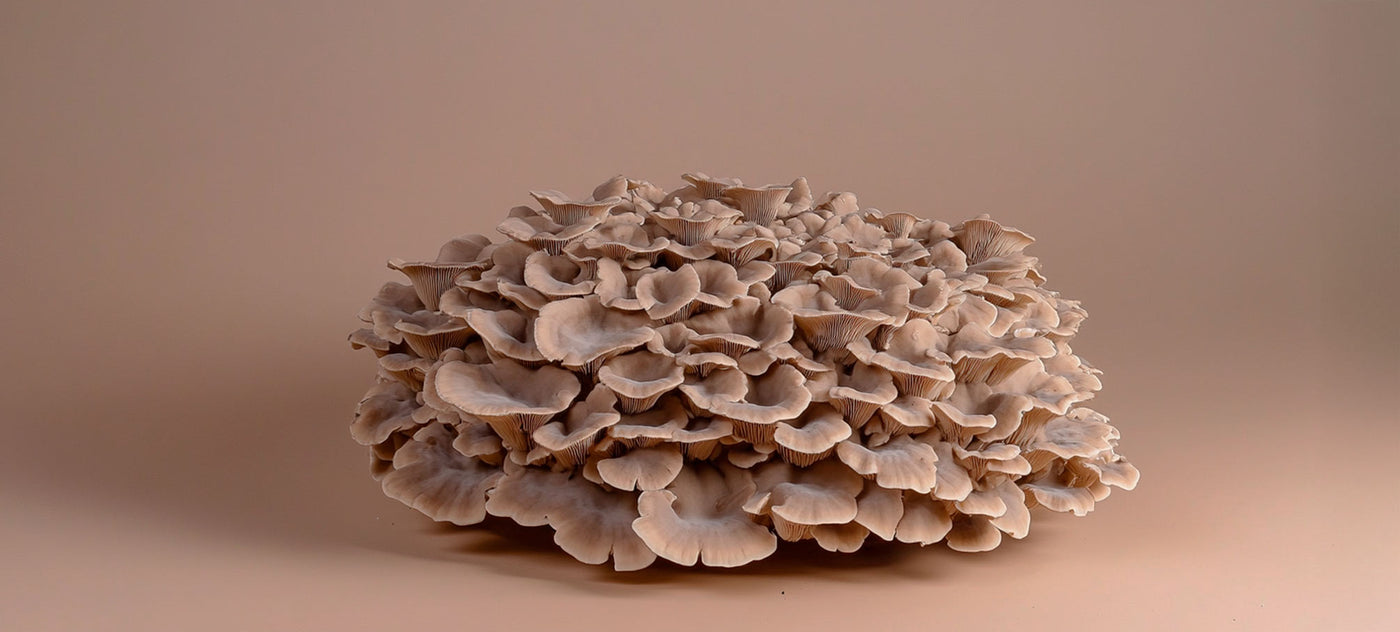
Polyporus umbellatus belongs to the order Polyporales and family Polyporaceae, historically sharing genus classifications with Maitake (Grifola frondosa). As a saprophytic species, it derives nutrients by decomposing hardwood timber. As the fruiting bodies mature, the tissue transitions from a soft, fleshy white texture to a firmer, fibrous consistency. In the wild, large clusters can form across forest floor substrates, measuring between 10 and 50 cm across and occasionally reaching significant biomass.
Notably, the subterranean structure of the mushroom forms a dense, black underground sclerotium resembling a truffle—accounting for traditional folk names such as ‘pig truffle’ or Zhu Ling (猪苓). Scientific analyses of both the fruiting body and sclerotium highlight an exceptional concentration of active biomolecules.
The culture in bioreactors
The culture in bioreactors
Quality, Purity, and Consistency in Our Production Systems
Our commitment to excellence is reflected in our strict quality assurance standards, ensuring purity and consistent quality across our products.
R&D and Polyporus studies
R&D and Polyporus studies
- Hifas da Terra conducts studies to improve fungus production processes and optimize the development of new biotechnological base ingredients
- Hifas da Terra has, in its wide mycoteca (Micological Bank Hifas), its own strains isolated from the Iberian Peninsula that selects for the development of its formulas
- Hifas da Terra develops multiple studies in collaboration with research centers and universities.
Curiosities
Curiosities
- The famous Otzi, the Ice man found mummified, carried two types of fungi. It is suspected that he used them to protect themselves from infections.